
Read This First (Quick Picks + Why This Guide Converts)
Upgrading to an undermount sink is one of the highest-ROI kitchen tweaks you can make: it cleans faster, looks sleeker, and frees up counter space. This guide is designed to help you make informed purchasing decisions with confidence. You’ll get a quick shortlist, a simple buyer’s framework, and deep-dive reviews so you can choose in minutes (not days).
Quick Picks (Skip to Buy):
Best Overall: Kraus Standart PRO KHU100-30 — durable 16-gauge steel, grid included.
Best Budget (Value Composite): Elkay Quartz Classic ELGRU13322 — quiet, matte colors, offset drain.
Best Premium: Kohler Whitehaven K-6487 — iconic farmhouse undermount in glossy enamel.
Introduction to Undermount Kitchen Sinks
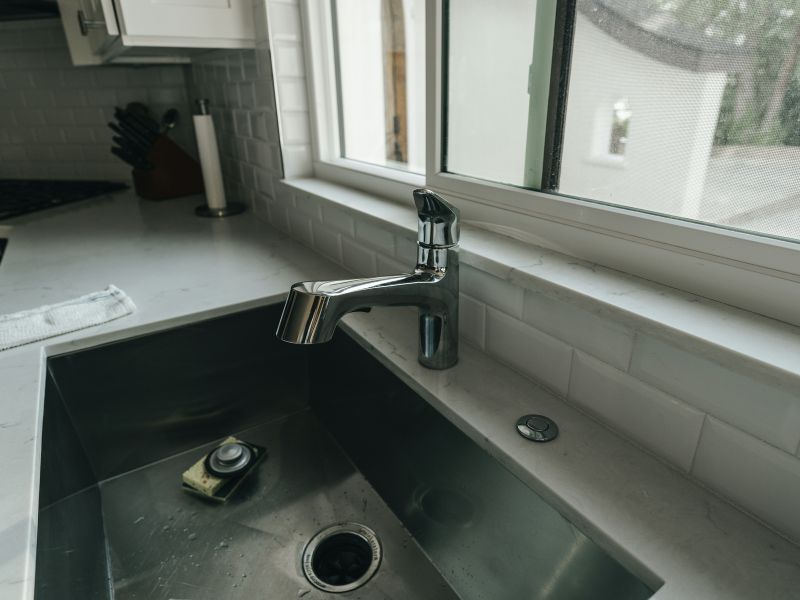
What is an undermount sink?
An undermount kitchen sink is installed beneath the countertop rather than sitting on top of it. The counter edge is exposed around the bowl, creating a seamless transition from prep surface to sink. This design makes wiping crumbs and liquids into the basin effortless, providing a clean, modern look that suits most kitchen styles.
Why homeowners choose undermount over drop-in
- Cleaner lines & more counter space: No rim resting on the counter, so the workspace feels larger and looks sleeker.
- Easy cleanup: Food and water sweep directly into the basin—no lip to trap grime.
- Premium feel: Often associated with higher-end renovations and solid-surface counters.
Where undermounts shine—and where they don’t
Strengths
- Excellent for food prep and quick wipe-downs.
- Typically deeper bowls (9–10″) for soaking pans and baking sheets.
- Broad material choice: stainless steel, granite composite, fireclay, and cast iron.
Trade-offs
- Higher installation precision: Requires sturdy support, an accurate cutout, and strong sealing.
- Countertop compatibility: Best suited for stone/solid surface materials (such as quartz, granite, or solid surface). Laminate usually isn’t recommended because the exposed edge can swell if not protected.
- Upfront cost: A sink and labor can be pricier than a drop-in.
The anatomy (terms you’ll see in this guide)
- Gauge (stainless steel): Lower is thicker (e.g., 16-gauge is thicker than 18-gauge) and resists denting.
- Sound dampening: Undercoating and pads reduce water noise and vibration.
- Corner radius: Tight-radius corners look sharp and modern but can be trickier to clean; standard radius is more forgiving.
- Bowl configuration: Single, double (equal or offset), and workstation styles with integrated ledges for accessories.
- Finish/texture: Brushed steel hides scratches; composite and fireclay offer color choices and matte looks.
“Reveal” styles you can choose
- Negative reveal: The counter slightly overhangs the sink, giving the cleanest look and protecting the rim, but crumbs can collect under the overhang if the seal is poor.
- Zero reveal (flush): The counter and sink edges are even, sleek, and precise, requiring careful fabrication.
- Positive reveal: A small line of sink rim is visible, making it easier to verify the sealant, but it shows a narrow ledge where residue can accumulate.
Care & maintenance basics
- Daily: Rinse, wipe, and dry to prevent water spots and mineral buildup.
- Weekly: Mild dish soap and a soft sponge; avoid harsh abrasives on polished surfaces.
- Protection: Use a bottom grid to shield from scratches and to keep dishes off the base.
- Seal check: Inspect the silicone bead at the counter edge periodically and reseal if you notice gaps.
Which undermount sink is best for
- Renovations using quartz, granite, or solid surface counters.
- Cooks who value fast cleanup and a streamlined workspace.
- Homeowners seeking a modern aesthetic and willing to invest in proper installation.
Quick choosing checklist (what to know before buying)
- Cabinet width & base size: (standard sinks 27″–33″ wide; confirm your base-cabinet clearance).
- Material priority: steel (versatility), composite (color + scratch resistance), fireclay/cast iron (heritage look).
- Depth & ergonomics: 9–10″ is roomy; shallower bowls are easier on the back.
- Noise & durability: Look for thicker steel and sound pads, as well as composites with good heat/impact ratings.
- Accessories: Use a cutting board, colander, and workstation ledge if you meal-prep often.
- Installation plan: Utilize an experienced fabricator, ensure proper supports/brackets, and use high-quality silicone/epoxy seal.
How to Choose the Right Undermount Kitchen Sink
Material choices (pick by use-case, not hype)
- Stainless steel (16–18 gauge, 304/18-8): Most forgiving, easy to match, lighter to install. Look for 16-gauge if you’re tough on cookware; 18-gauge is fine for most homes. Brushed finishes hide wear better than mirror.
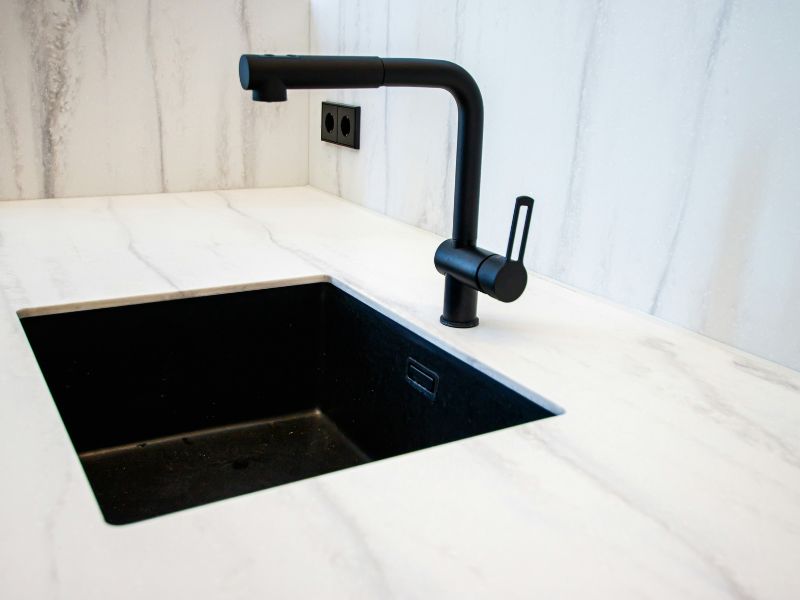
- Granite/quartz composite: Dense, quiet, highly scratch- and stain-resistant with matte colors (black/grey/white). Needs sensible heat handling (don’t drop red-hot pans).
- Fireclay / enameled cast iron: Premium, glossy, “heritage” look (common on farmhouse/apron undermounts). Heavier; confirm cabinet reinforcement and counter cut accuracy.
Size & depth (fit the cabinet, then your cookware)
- Cabinet first: Most 30–33″ sinks require a 33″ minimum base cabinet; wider bowls (≥32″) often require a 36″ base cabinet. Always check the manufacturer’s minimum base-cab spec.
- Depth: 9–10″ is roomy for sheet pans; 8–8.5″ is kinder on your back and better suited for short users or those with shallow disposers.
- Bowl layout:
- Single bowl: Maxes space; simplest to scrub trays.
- Double (50/50 or 60/40): Split tasks; slightly reduces the pan space for each side.
- Workstation ledge: Built-in rails for boards/colanders, free counter space (great for compact kitchens).
Installation & maintenance (where undermounts win—or fail)
- Counter compatibility: Best with quartz, granite, or solid surface (laminate is usually not recommended due to its exposed core).
- Reveals:
- Zero/flush: A crisp look and precise fabrication.
- Negative: Counter overhangs hide the sink’s rim, requiring a neat wipe-in; the seal must be perfect.
- Positive: Small rim visible—easier to re-seal, but shows a narrow ledge.
- Support & sealing: Use brackets/rails as directed; apply high-grade silicone and ensure even clamping. Re-inspect the bead annually.
- Care: Daily rinse/wipe; weekly mild soap. Use a bottom grid to reduce scratches & improve drainage.
Noise & scratch resistance (real-world feel)
- Stainless steel: Prefer thicker gauge, undercoating, and pads. Tight-radius corners look sharp, but they require more effort to clean.
- Composites/fireclay: Naturally quieter; opt for reputable brands with good heat/impact ratings.
Price & warranty (total cost of ownership)
- Sink price ≠ project price. Budget for fabrication, mounting hardware, accessories (grids, strainers), and a possible disposal flange.
- Look for limited lifetime warranties on the bowl and clear accessory policies.
Our Top 5 Best Undermount Kitchen Sinks
1) Kraus Standart PRO KHU100-30 — 30″ Single-Bowl, 16-Gauge Stainless
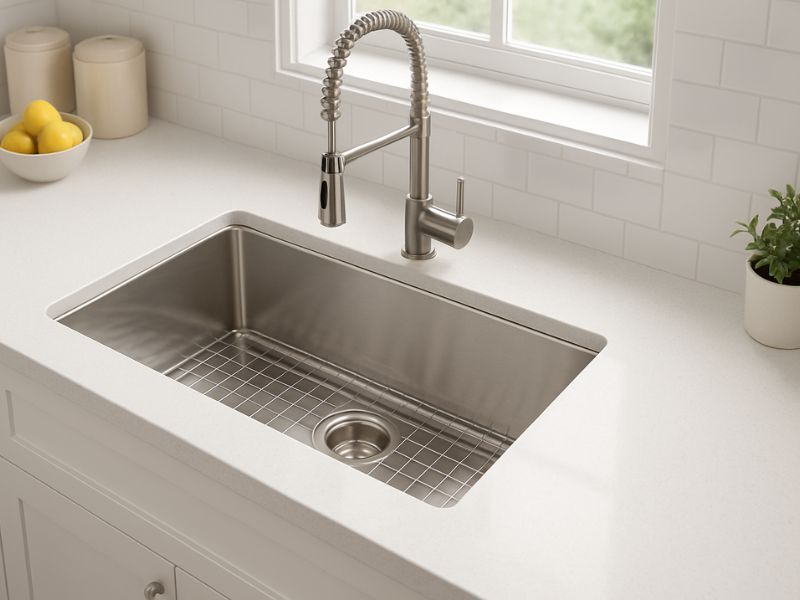
Quick specs: 30″ L × 18″ W × 10″ D overall; bowl 28″ × 16″; 16-gauge T304 stainless; rear drain; minimum base cabinet 33″; includes bottom grid & basket strainer.
Why it stands out: Thick 16-gauge steel, combined with full undercoating and pads, keeps noise down and dents at bay. The 10″ depth swallows sheet pans and stockpots, and the included bottom grid protects the base from scuffs straight out of the box.
Real-world fit & install notes: Plan for a 33″ base. Tightly radiused corners look modern but need a little extra attention when wiping; a soft bottle brush helps. If you have a disposer, the rear drain allows for more usable cabinet space for plumbing and storage bins.
Pros
- Heavy 16-gauge steel + robust sound deadening.
- Grid and strainer included (fewer add-on costs).
- Simple, reliable single-bowl layout.
Cons
- Tight corners clean slower than large-radius bowls.
- Stainless steel shows water spots unless you wipe/dry.
Best for: High-use kitchens wanting durability without workstation rails.
2) Ruvati RVH8310 — 30″ Workstation Undermount, 16-Gauge Stainless
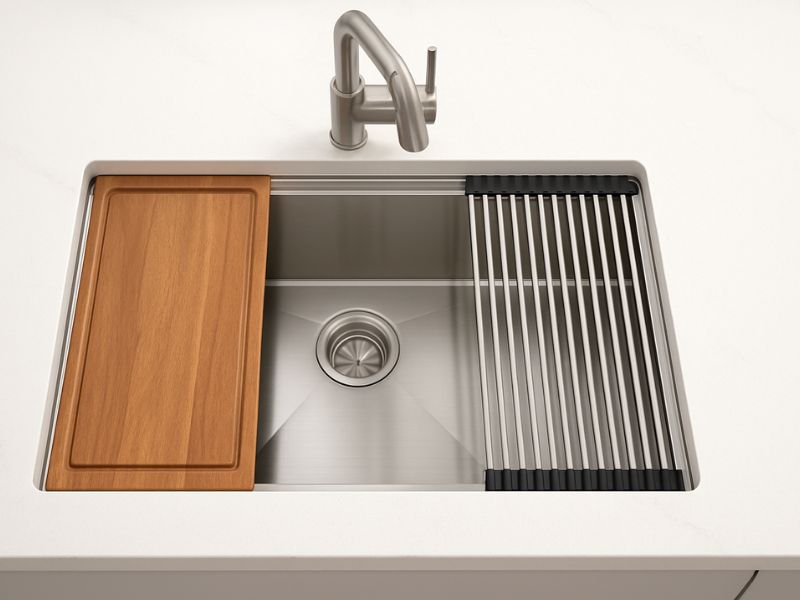
Quick specs: Exterior 30″ × 19″; interior ~28⅜” × 16″; 10″ depth; minimum base 33″; includes cutting board, roll-up rack, colander, bottom grid, basket strainer, decorative drain cover; cUPC/IAPMO compliant.
Why it stands out: The single-tier ledge turns the sink into a prep station, allowing you to slice on the board, rinse in the colander, and air-dry on the roll-up rack, making it great for small counters.
True 16-gauge steel, combined with a heavy undercoating, keeps it quiet and sturdy.
Real-world fit & install notes: Requires careful templating so the ledge sits level. If you use a disposer, note that the included basket strainer is for standard plumbing; use the flange that ships with your disposer instead.
Pros
- Workstation accessories are included out of the box.
- 16-ga T304 steel + sound pads.
- The rear drain keeps cabinet space flexible.
Cons
- Sharp inside corners = premium look, slightly more cleaning effort.
- Cutting board maintenance (oil/seal occasionally).
Best for: Meal-prep households and compact kitchens that need the sink to “earn” counter space.
3) Kohler Whitehaven K-6487 — 29-3/4″ Apron-Front (Farmhouse) Undermount, Enameled Cast Iron
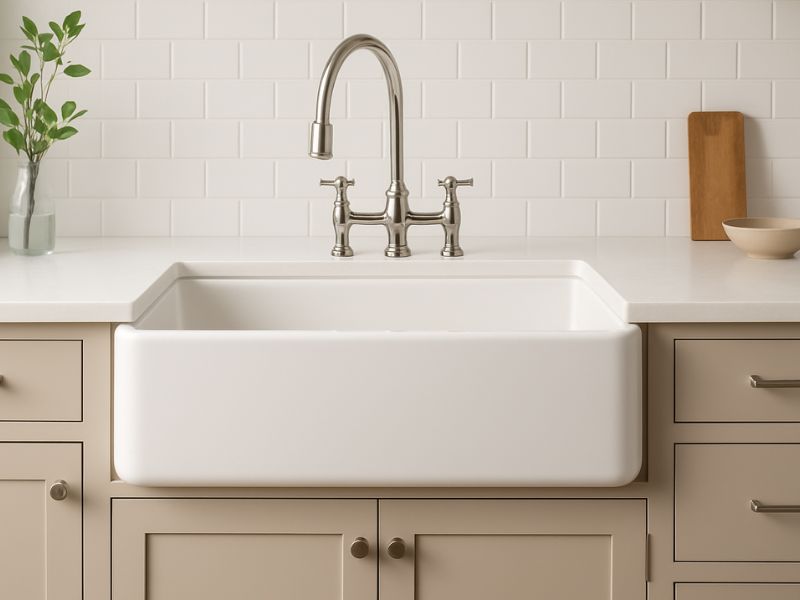
Quick specs: 29-3/4″ undermount single-bowl; 9″ bowl depth; tall Self-Trimming® apron (≈8-13/16″); 30″ minimum base; offset drain; enameled cast iron.
Why it stands out: This is the go-to farmhouse undermount sink with a self-trimming apron that simplifies installation and a glossy, durable cast-iron surface that resists stains and maintains a premium look for years.
Real-world fit & install notes: It’s heavy—plan for cabinet reinforcement and pro handling. The apron overlaps the cabinet face, helping hide minor cuts and giving a clean line. Offset drain improves under-sink storage and keeps water moving.
Pros
- Iconic farmhouse look with true undermount install.
- Self-Trimming® apron eases fabrication.
- Hard, glossy enameled surface with excellent cleanability.
Cons
- Price + weight (labor and support costs are higher).
- Fewer colorways than composites.
Best for: Design-first remodels seeking a premium farmhouse vibe with durable enamel.
4) Elkay Quartz Classic ELGRU13322 — 33″ Single-Bowl, Quartz/Granite Composite
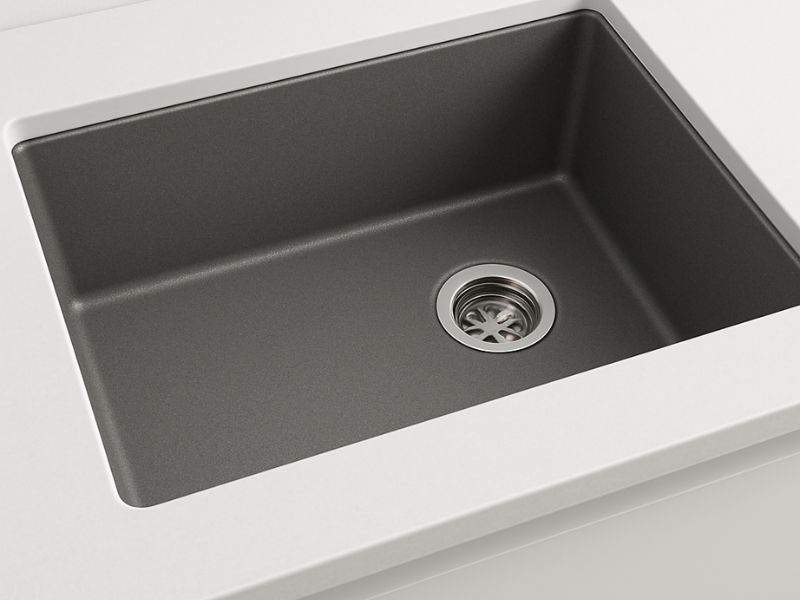
Quick specs: 33″ × 18-7/16″ × 9-7/16″ single bowl; undermount; offset drain; multiple colors; naturally sound-deadening material.
Why it stands out: A dense composite means a quiet, scratch-resistant sink with matte colors that hide watermarks better than shiny steel.
The offset drain preserves base-cab storage and creates a natural prep zone on the big side.
Real-world fit & install notes: Composites are rigid, but avoid thermal shock—don’t drop red-hot cookware into a dry basin. If you have tough water, a weekly rinse with mild soap helps keep the matte finish looking new.
Pros
- Multiple color options with a consistent, modern matte look.
- Quieter than most stainless sinks.
- Offset drain improves storage and workflow.
Cons
- Heavier than thin steel; confirm support.
- Respect heat—use a rack for pans fresh from the oven.
Best for: Modern kitchens wanting color, quiet operation, and easy day-to-day maintenance.
5) BLANCO PRECIS 441478 “Super Single” — 32″ SILGRANIT® Composite
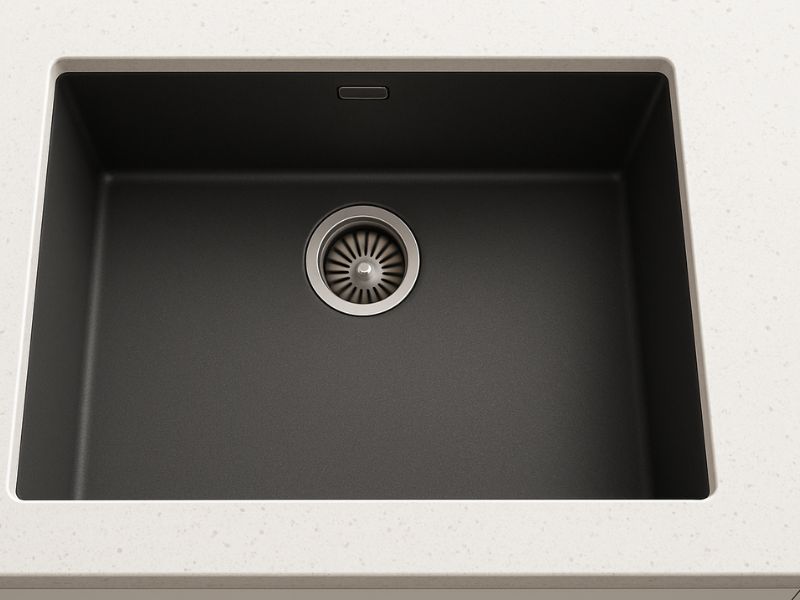
Quick specs: Approximately 32″ × 19″ × 9.5″, undermount, rear drain, minimum base 36″; made of SILGRANIT® (premium granite composite). Multiple colors (e.g., Coal Black, Cinder).
Why it stands out: BLANCO’s SILGRANIT formula is known for heat, scratch, and stain resistance with a smooth, non-porous surface that’s food-safe. The rear drain unlocks more usable cabinet space and keeps the main prep area clear.
Real-world fit & install notes: Plan for a 36″ base. For optimal longevity, pair with the optional bottom grid (and a color-matched drain kit) to keep the base pristine and maintain a cohesive look.
Pros
- Extremely durable composite with a color-true matte finish.
- Spacious “Super Single” footprint for trays and woks.
- Many finish options to match counters/cabinets.
Cons
- Accessories are often sold separately.
- Requires a 36″ base (won’t fit smaller cabinets).
Best for: Premium, design-forward kitchens that want a color sink that shrugs off daily abuse.
Comparison Table – Top 5 Undermount Kitchen Sinks
| Model (link) | Material | Exterior (W × D) | Bowl depth | Cabinet fit notes | Standout features | Best for |
| Kraus KHU100-30 | 16-ga T304 stainless | 30″ × 18″ | 10″ | Min. base 33″ | Thick 16-ga steel, noise pads, rear drain, grid & strainer included | Heavy-use kitchens need a durable single bowl |
| Ruvati RVH8310 Workstation | 16-ga T304 stainless | 30″ × 19″ | 10″ | Min. base 33″ | Built-in ledge + board, colander, roll-up rack, grid | Small/medium kitchens that want prep space in the sink |
| Kohler Whitehaven K-6487 (apron undermount) | Enameled cast iron | 29-3/4″ × 21-9/16″ | 9″ | Min. base 30″; Self-Trimming® apron | True farmhouse look, glossy enamel, offset drain | Design-first remodels want a premium farmhouse style |
| Elkay Quartz Classic ELGRU13322 | Quartz/granite composite | 33″ × 18-7/16″ | 9-7/16″ | Check the cabinet; composite bowls are heavier | Naturally sound-deadening, offset drain, multi-color options | Modern kitchens want matte color + quiet use |
| BLANCO PRECIS 441478 “Super Single” | SILGRANIT® composite | ≈32″ × 19″ | ≈9.5″ | Typically for 36″ base; verify on spec | Heat/scratch/stain-resistant, rear drain, many colors | Premium, style-forward spaces needing a big single bowl |
Pros & Cons of Undermount Kitchen Sinks (at a glance)
Pros
- Seamless counter-to-sink wipe-in; no rim catching crumbs.
- Clean, modern lines; increases perceived counter space.
- Often deeper basins, great for sheet pans & stockpots.
Cons
- Requires precise fabrication and strong sealing/support
- Best with stone/solid-surface counters (laminate is tricky)
- Upfront cost (sink + pro install + accessories)
FAQs
1. Are undermount sinks hard to install?
They’re straightforward for a pro: template the cut, reinforce as required, set with brackets/clamps, and apply a continuous high-grade silicone bead. DIY is possible, but it’s riskier due to precision/tolerance issues.
2. Do undermounts leak more than drop-ins?
Not if sealed correctly. Inspect the silicone bead annually and reseal if you notice gaps, discoloration, or water wicking.
3. What’s the most durable material?
For metal: 16-gauge stainless resists dents and cleans easily.
For non-metal: quality composites (SILGRANIT®, quartz) are quiet and scratch-resistant; cast iron offers a glossy, premium finish with excellent longevity.
4. Can I use an undermount sink with laminate countertops?
Generally, it is not recommended because the counter edge is exposed, allowing moisture to swell the core. If necessary, use specialty solutions designed for laminate and accept the trade-offs.
5. What “reveal” should I choose?
Zero/flush: crisp look, needs precise fab
Negative: counter overhangs rim, protects edge, tidy wipe-in
Positive: a thin rim is visible, easiest to monitor/maintain seal
Conclusion – Which One Should You Buy?
- Best Overall (value + durability): Kraus KHU100-30 — thick 16-gauge steel, quiet pads, included grid/strainer, easy fit in 33″ bases.
- Best for Small/Busy Kitchens: Ruvati RVH8310 — the workstation ledge + included accessories effectively add prep space without enlarging your counters.
- Best Premium/Farmhouse Look: Kohler Whitehaven K-6487 — iconic cast-iron apron-front undermount with a self-trimming apron that simplifies a tricky category.
- Best Color & Quiet: Elkay ELGRU13322 — a matte composite finish hides water spots, is naturally quiet, and features an offset drain for cabinet space.
- Best Big Single Composite: BLANCO PRECIS 441478 — rugged SILGRANIT®, rear drain, wide color range; ideal for 36″ bases needing a roomy, resilient bowl.